Context
The operational gap
Many teams run important processes through spreadsheets, email threads, chat messages, and manual reminders. That works until volume grows, ownership blurs, and errors become expensive.
A concept for forms, approvals, assignments, notifications, dashboards, exception handling, and repeatable internal workflows.
Many teams run important processes through spreadsheets, email threads, chat messages, and manual reminders. That works until volume grows, ownership blurs, and errors become expensive.
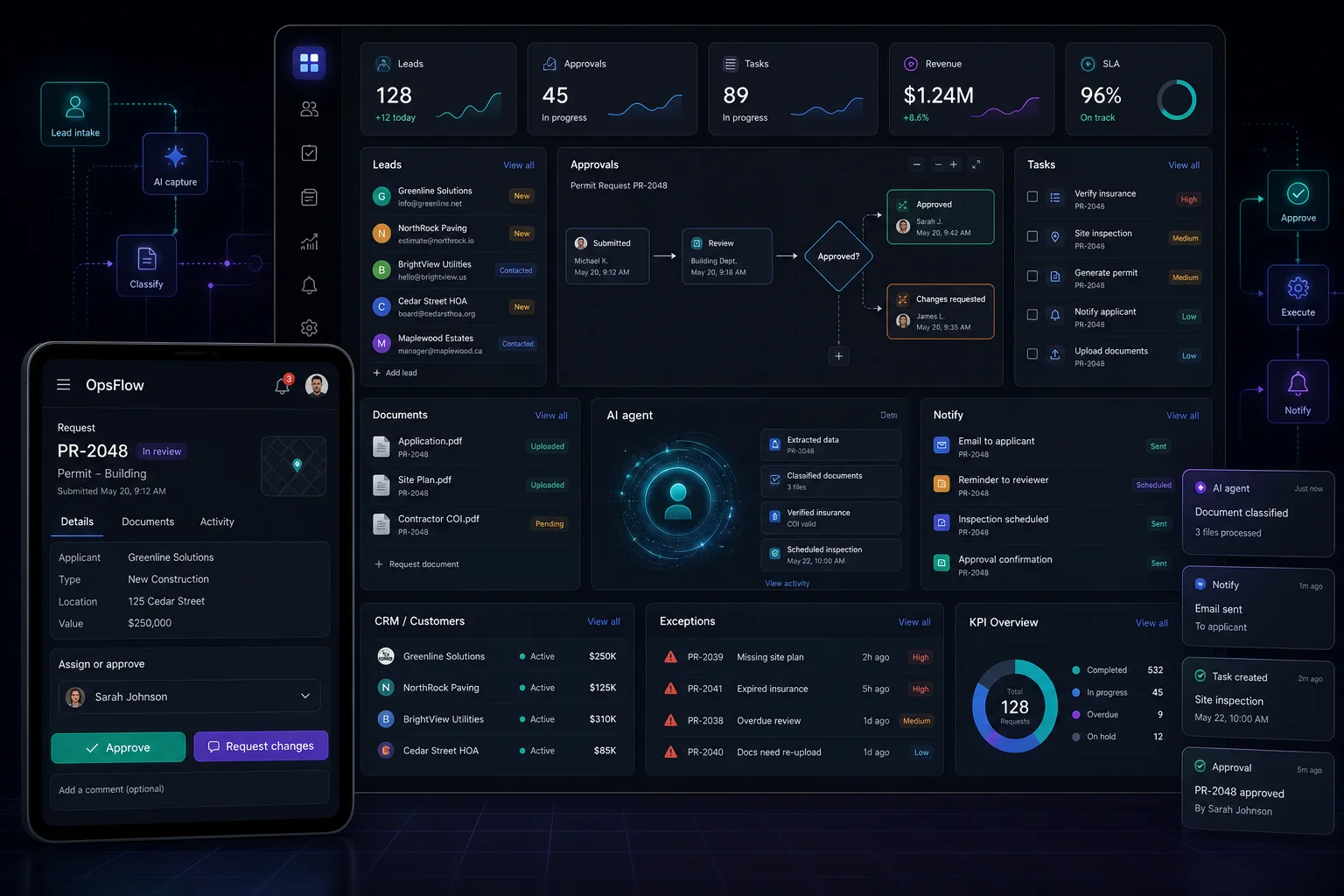
The concept shows an internal operating system for request intake, approval rules, task ownership, notifications, analytics, and exception handling.
Less duplicate entry and fewer manual handoffs
Clearer ownership for approvals and exceptions
Faster reporting without rebuilding spreadsheet views
More consistent process execution across teams
The artifacts show how business workflows become software requirements.
The operating path from intake to approval, assignment, completion, and reporting.
Rules that define when to notify, escalate, assign, approve, or flag exceptions.
A management view for throughput, cycle time, overdue work, and process bottlenecks.
Identify the repeated process, inputs, owners, rules, outputs, and current pain points.
Build the intake flow, approval states, notifications, and dashboard shell.
Run with one team and refine edge cases before expanding.
Add integrations, reporting, permissions, documentation, and ongoing support.
We can adapt this concept to a real context, with scope, risks, data, and delivery steps made clear.