Maintenance requests lack structure
Tenants report problems in different formats, with missing photos, unit details, urgency, or access windows.
Property managers handle urgent requests, vendor follow-up, inspections, lease documents, and owner questions across too many inboxes. Auvant can build a focused operating layer for the work that generic property tools miss.
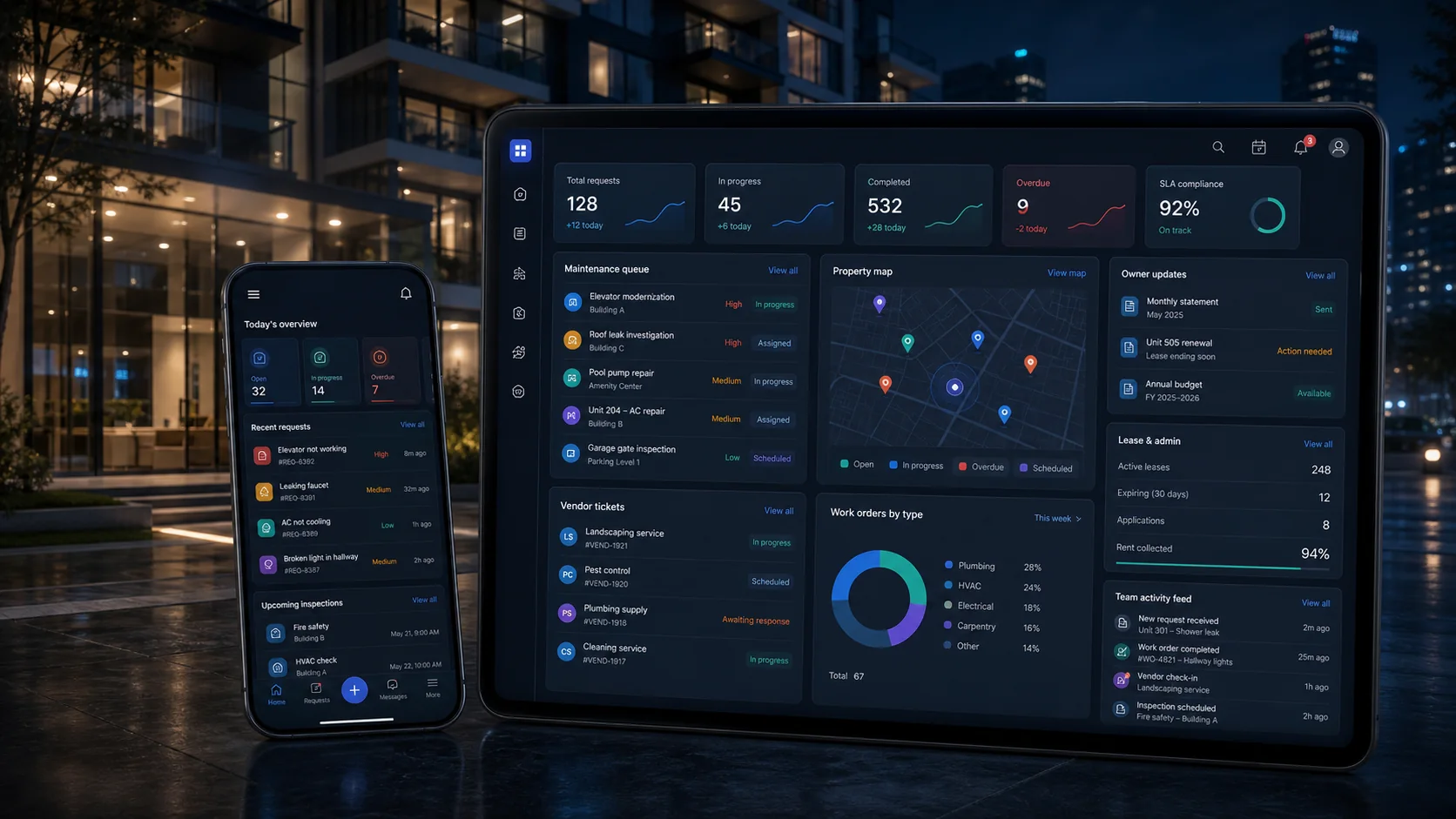
Auvant looks for repeatable work that is valuable enough to improve, but controlled enough to pilot safely.
Tenants report problems in different formats, with missing photos, unit details, urgency, or access windows.
Quotes, appointments, completion proof, and invoice checks live in separate conversations.
Managers spend time summarizing the same open items, costs, and delays.
Photos and notes are captured, but not always converted into tasks, priorities, or follow-up.
Information is copied, chased, summarized, or remembered across disconnected tools.
A portal captures issue type, unit, photos, access notes, urgency, and permission to enter.
Information is copied, chased, summarized, or remembered across disconnected tools.
Work is assigned, deadlines are tracked, and completion photos or invoices are attached to the case.
Information is copied, chased, summarized, or remembered across disconnected tools.
Walkthrough notes become repairs, owner approvals, reminders, and maintenance plans.
Information is copied, chased, summarized, or remembered across disconnected tools.
Open work, costs, delays, and completed items roll into owner-ready summaries.
The useful pattern is not one generic chatbot. It is a small set of agents with narrow jobs, clear inputs, and human review where risk matters.
Try the AI Agent Lab →Classifies issues, estimates urgency, and asks tenants for missing details.
Prepares dispatch notes, quote comparisons, and follow-up reminders.
Turns inspection notes and photos into action items for review.
Drafts concise portfolio updates from live case activity.
Requests, photos, status, messages, and resolution history in a clear tenant experience.
A queue organized by building, unit, vendor, priority, cost, and age.
Response times, completion proof, repeated issues, and invoice follow-up by vendor.
Portfolio health, open work, spending, response time, and upcoming maintenance.
Start with one building, one owner group, or one recurring maintenance category.
Define the information required before a request can enter the work queue.
Validate the experience before connecting email, forms, or vendor processes.
Track response time, tenant updates, vendor delays, and owner reporting time.
Auvant positions AI as an operational assistant, not a black box that makes important decisions without people.
AI can prepare work orders and summaries, but spend approvals stay with the manager or owner.
Tenant, lease, payment, and owner data should be permissioned and minimized.
Every request should keep who changed status, what was sent, and what proof was attached.
Yes. Email can remain an input while the system turns requests into structured records.
Yes. Owner access can be restricted to the properties and summaries they are allowed to view.
No. The strongest fit is often a small or mid-sized operator that has outgrown inbox-based coordination.
Start with a focused automation audit or a short pilot discussion. The goal is to find one workflow worth improving, prove it, then expand only where it pays off.