Order intake is inconsistent
Orders arrive by email, phone, portal, or PDF with different formats and missing details.
Logistics teams run on timing, exceptions, and clean handoffs. Auvant builds operational dashboards and AI-assisted workflows for order intake, dispatch, delivery updates, inventory signals, and customer follow-up.
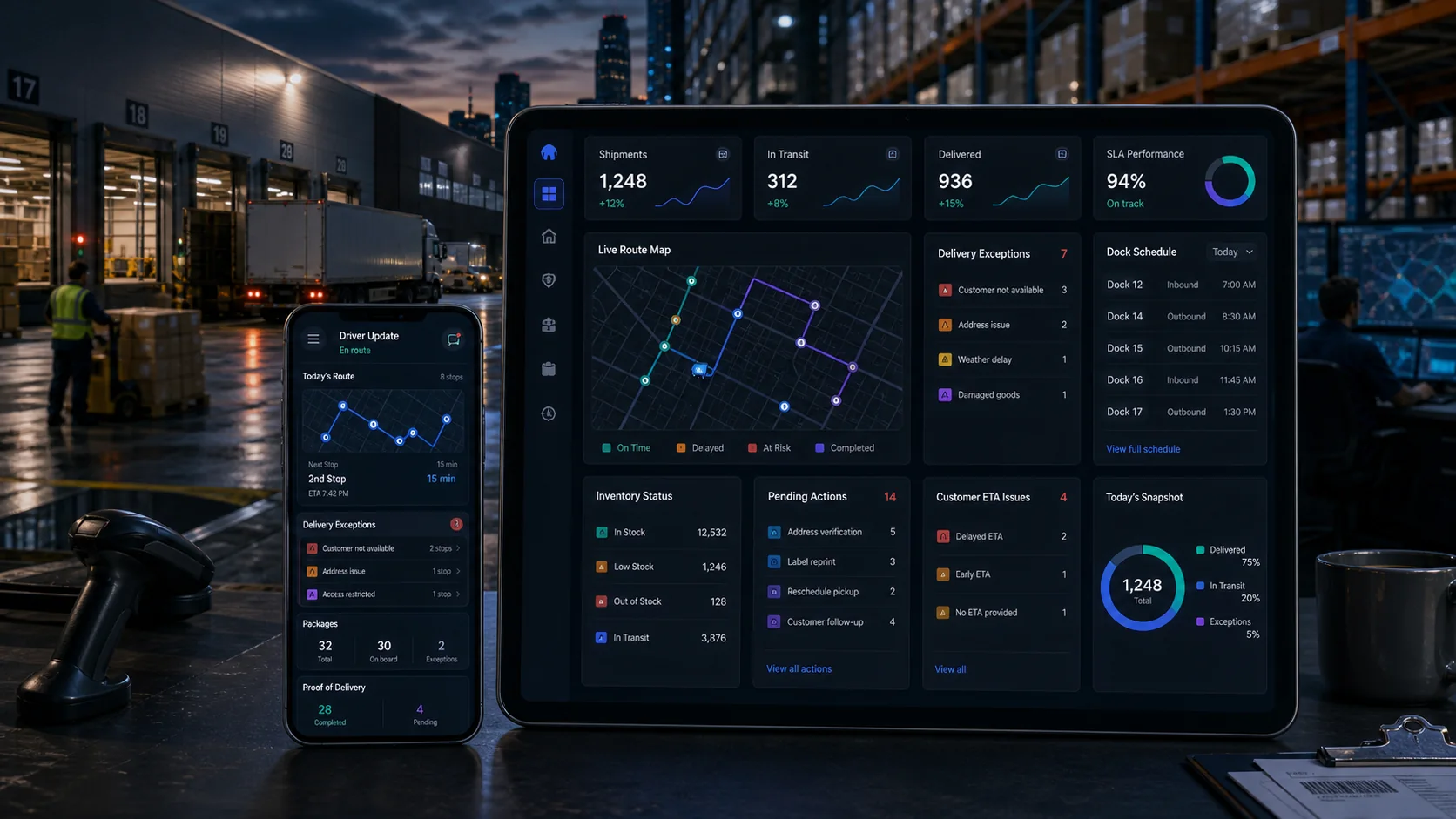
Auvant looks for repeatable work that is valuable enough to improve, but controlled enough to pilot safely.
Orders arrive by email, phone, portal, or PDF with different formats and missing details.
Short picks, delivery delays, address issues, and damaged items get noticed after the customer is already affected.
Drivers, warehouse staff, and customer service do not always share the same current status.
Teams know the work is busy, but not always which routes, customers, or products are causing the delays.
Information is copied, chased, summarized, or remembered across disconnected tools.
Extract incoming order details, flag missing fields, and prepare tasks for review.
Information is copied, chased, summarized, or remembered across disconnected tools.
Centralize late orders, short inventory, address problems, failed deliveries, and urgent customer updates.
Information is copied, chased, summarized, or remembered across disconnected tools.
Prepare accurate status messages from approved operational data.
Information is copied, chased, summarized, or remembered across disconnected tools.
Summarize route health, backlog, service risk, and unresolved exceptions for managers.
The useful pattern is not one generic chatbot. It is a small set of agents with narrow jobs, clear inputs, and human review where risk matters.
Try the AI Agent Lab →Reads routine order emails or PDFs and structures them for human review.
Detects missing data, delay risk, short picks, and unusual route issues.
Drafts clear, approved-status updates when orders change.
Turns daily activity into a manager-ready briefing.
A queue for incoming orders, missing fields, confirmations, and review status.
A live view of route issues, blocked deliveries, substitutions, and customer impact.
Order status, recent issues, promised follow-up, and message history by account.
Items at risk, repeated shorts, substitutions, and demand patterns for review.
Start with email orders, PDF orders, delivery exceptions, or route updates.
Decide which extracted data, updates, or exceptions need human approval.
Give dispatch and customer service one shared picture of what needs action.
Track fewer missed updates, faster response, and cleaner daily handoffs.
Auvant positions AI as an operational assistant, not a black box that makes important decisions without people.
AI should summarize and draft from operational records, not invent delivery promises.
A person remains responsible for decisions that affect customers, credits, or priority.
Order changes, notes, and outbound updates should stay tied to the case.
Yes, with the right guardrails. The system can extract likely order details and present them for human review.
Often. A first pilot can start beside existing tools, then integrate once the workflow is proven.
Exception tracking is usually strong because it creates immediate visibility without replacing core dispatch systems.
Start with a focused automation audit or a short pilot discussion. The goal is to find one workflow worth improving, prove it, then expand only where it pays off.