Intake is incomplete
Patients or clients submit partial information, and staff must chase forms, histories, insurance, or appointment details.
Clinics often need help with intake, forms, reminders, referrals, documents, and staff queues. Auvant focuses on administrative workflows where AI can prepare and organize work while professionals stay in control.
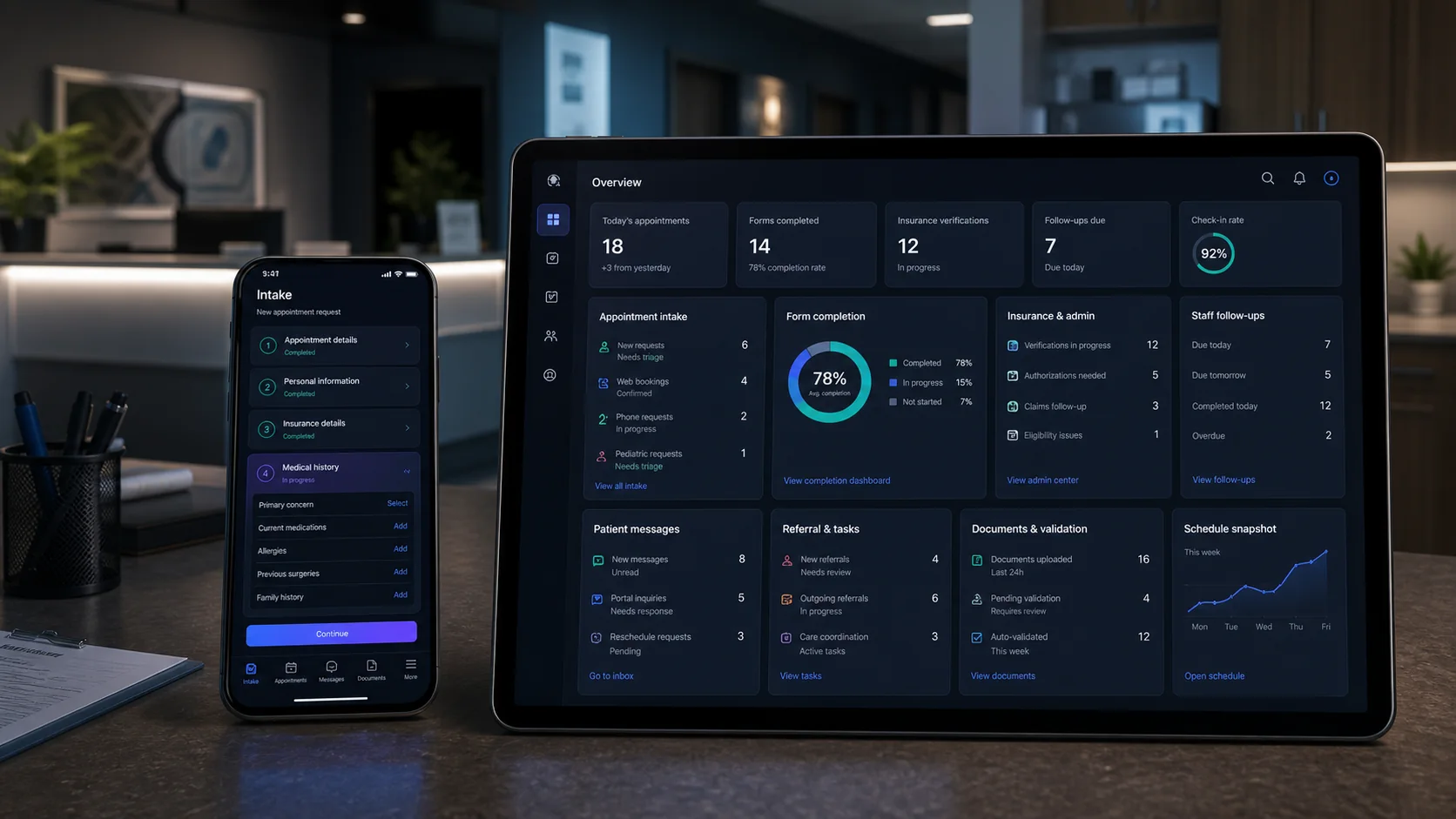
Auvant looks for repeatable work that is valuable enough to improve, but controlled enough to pilot safely.
Patients or clients submit partial information, and staff must chase forms, histories, insurance, or appointment details.
Questions, reminders, referrals, and document requests compete with live service at the front desk.
No-shows, recalls, treatment plans, lab results, and missing paperwork require constant tracking.
Staff answer repetitive questions from memory, especially across locations or languages.
Information is copied, chased, summarized, or remembered across disconnected tools.
Collect forms, consents, reason for visit, insurance details, uploads, and missing-field prompts before arrival.
Information is copied, chased, summarized, or remembered across disconnected tools.
Organize incoming documents, classify requests, and route items for staff review.
Information is copied, chased, summarized, or remembered across disconnected tools.
Prepare reminders for approved staff review based on appointment, treatment, or service rules.
Information is copied, chased, summarized, or remembered across disconnected tools.
Help staff find approved policy, pricing, prep, opening hours, and process answers quickly.
The useful pattern is not one generic chatbot. It is a small set of agents with narrow jobs, clear inputs, and human review where risk matters.
Try the AI Agent Lab →Checks whether forms, uploads, and basic details are complete before staff review.
Classifies non-diagnostic administrative documents and flags missing information.
Prepares appointment context, reminders, and rescheduling options for staff approval.
Answers staff questions from approved clinic content and escalates uncertain cases.
Forms, uploads, confirmations, instructions, and language-specific content in one flow.
Open intake items, missing documents, referrals, call-backs, and no-show follow-up.
A controlled list of approved follow-up opportunities and prepared message drafts.
Approved answers, scripts, policies, and escalation routes for front-desk teams.
Start with intake completeness, recall follow-up, referral routing, or document organization.
Separate admin support from clinical advice, diagnosis, and treatment decisions.
Show how staff approve, edit, or reject AI-prepared output.
Track fewer missing forms, shorter response time, and fewer manual follow-up lists.
Auvant positions AI as an operational assistant, not a black box that makes important decisions without people.
The first use cases should support admin work, not diagnosis, treatment, or medical judgment.
Patient or client-facing drafts should be checked by staff before sending.
Collect only needed information, restrict access, and avoid using sensitive data in public demos.
Auvant's recommended first step is administrative support only. Medical advice should stay with qualified professionals.
Yes. Intake, reminders, document routing, and policy support are common across dental, veterinary, and allied health settings.
No. It can act as a workflow layer around existing booking, email, form, and document tools.
Start with a focused automation audit or a short pilot discussion. The goal is to find one workflow worth improving, prove it, then expand only where it pays off.