Client files arrive everywhere
Receipts, statements, payroll files, invoices, and questions come through email, portals, shared drives, and texts.
Accounting and bookkeeping teams spend too much time collecting files, checking completeness, sorting questions, and tracking month-end work. Auvant builds controlled AI workflows that organize the admin load without making accounting judgments for you.
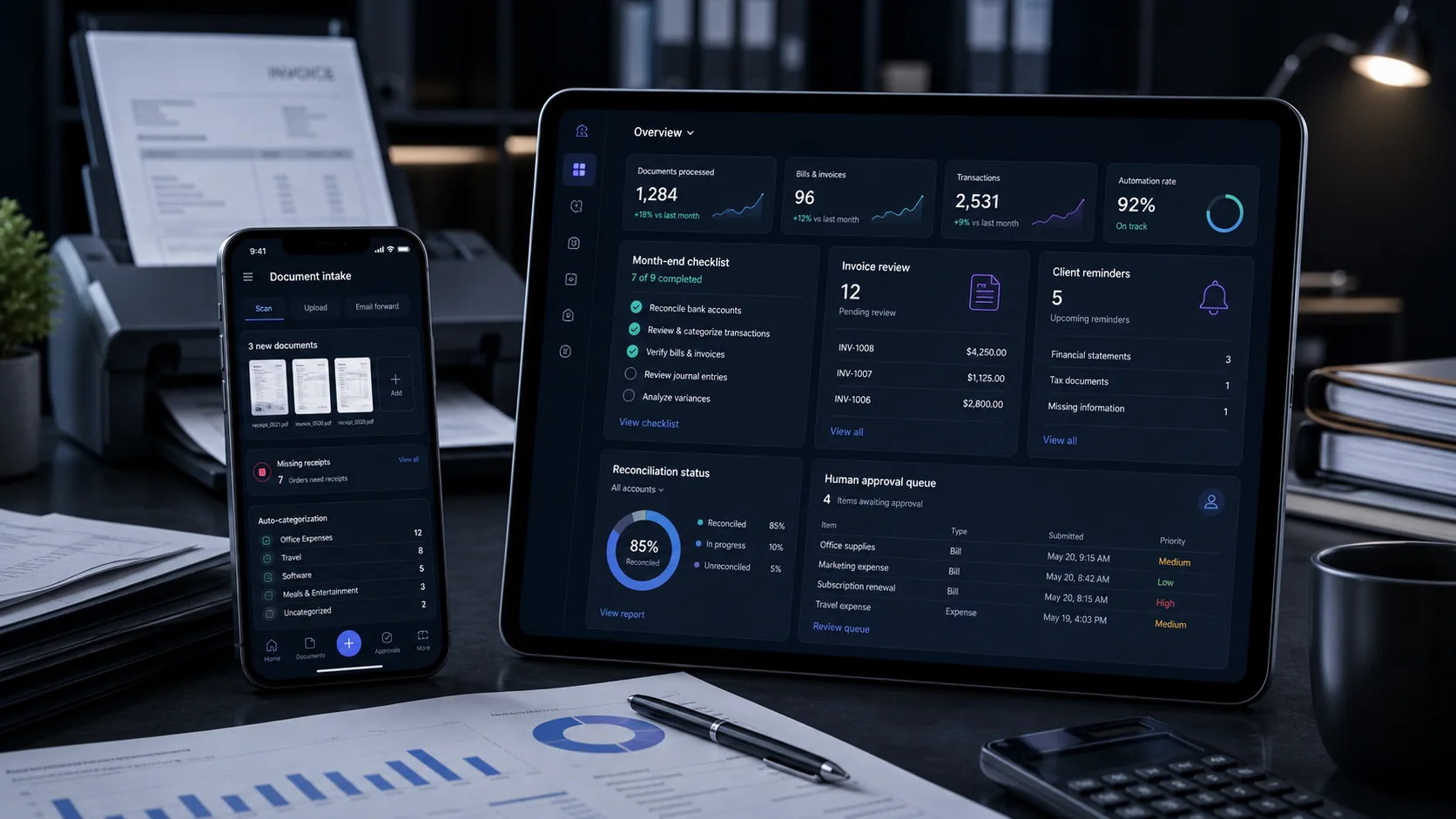
Auvant looks for repeatable work that is valuable enough to improve, but controlled enough to pilot safely.
Receipts, statements, payroll files, invoices, and questions come through email, portals, shared drives, and texts.
Staff send the same reminders for bank statements, receipts, access, approvals, and explanations.
Owners and managers do not always see which client work is blocked, ready, overdue, or waiting on review.
Small follow-ups consume attention during tax season, month-end, or payroll deadlines.
Information is copied, chased, summarized, or remembered across disconnected tools.
Capture uploads, categorize files, flag missing items, and prepare a completion checklist.
Information is copied, chased, summarized, or remembered across disconnected tools.
Track client status, blockers, unanswered questions, and review assignment.
Information is copied, chased, summarized, or remembered across disconnected tools.
Route client questions, approvals, and explanations into a visible queue.
Information is copied, chased, summarized, or remembered across disconnected tools.
Prepare polite reminders based on missing items and deadlines for staff approval.
The useful pattern is not one generic chatbot. It is a small set of agents with narrow jobs, clear inputs, and human review where risk matters.
Try the AI Agent Lab →Classifies routine uploads and flags missing or unclear items.
Drafts reminders for missing files, approvals, and unanswered questions.
Shows which clients are ready, blocked, overdue, or awaiting review.
Summarizes client context and open questions before manager review.
Secure uploads, checklists, messages, and status by client and period.
Client readiness, blockers, assignments, review stage, and deadlines.
Files grouped by type, client, confidence, exception, and human review need.
Missing items, overdue questions, prepared reminders, and communication history.
Start with monthly bookkeeping, tax document collection, payroll files, or year-end requests.
List what each client type must provide and what counts as incomplete.
Show staff and partners the exact view they would use daily.
Use AI for organization and drafting, not accounting conclusions.
Auvant positions AI as an operational assistant, not a black box that makes important decisions without people.
AI should organize files and draft admin communication, not provide accounting, tax, or legal advice.
Access controls, audit history, and careful data handling matter from day one.
Classifications, reminders, and summaries can be approved before action.
It can help classify and flag routine documents, but uncertain items should go to a human review queue.
A safe pilot starts with draft reminders for approval. Low-risk reminders can be automated later if desired.
Yes. Small teams benefit when repetitive client chasing becomes visible and repeatable.
Start with a focused automation audit or a short pilot discussion. The goal is to find one workflow worth improving, prove it, then expand only where it pays off.