Context
The operational gap
When field work is performed by contracted providers, residents still experience the service as municipal. Staff need visibility into what happened, what was delayed, what was missed, and what needs follow-up.
A concept for work orders, service confirmations, route exceptions, vendor updates, resident-facing notes, and municipal oversight.
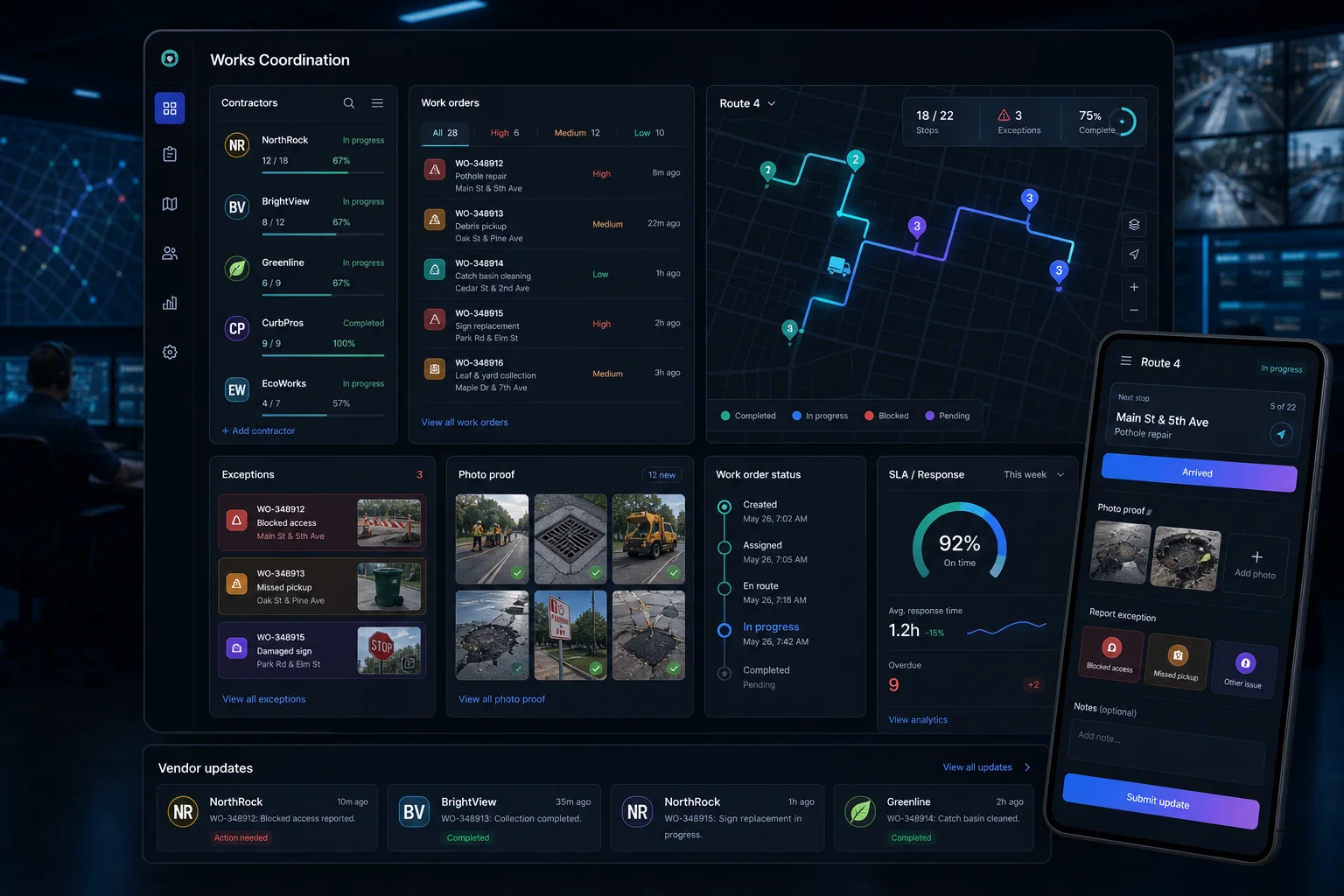
When field work is performed by contracted providers, residents still experience the service as municipal. Staff need visibility into what happened, what was delayed, what was missed, and what needs follow-up.
The concept gives City staff and contractors a shared view of routes, work orders, service confirmations, exceptions, notes, and escalation status.
Clearer municipal oversight of contracted service delivery
Faster exception handling when routes, pickups, or tasks are delayed
Less back-and-forth between staff, vendors, and residents
Better evidence trail for service quality and contract conversations
These artifacts show how municipal and vendor workflows can be aligned.
A shared workflow for issuing work, confirming completion, logging exceptions, and escalating problems.
The controlled list of reasons, severities, evidence, and responsible parties for service exceptions.
Municipal views for route completion, exceptions, vendor response time, and resident impact.
Map vendor responsibilities, confirmation points, exception reasons, and municipal visibility needs.
Build work order, route status, exception logging, and notes flows.
Run with one contractor workflow or service category before expanding.
Add reporting, permissions, audit history, and service-level views.
We can adapt this concept to a real context, with scope, risks, data, and delivery steps made clear.